Best 3D Printer Websites: Where to Buy Printers, Filament, and Models
Finding the right website for 3D printers and supplies isn’t one-size-fits-all. The best option depends on whether you’re buying a complete printer, a specific filament, or industrial-grade hardware. For a new machine with setup support, MatterHackers is the most reliable choice. For filament variety and fast shipping, Amazon works, but you risk inconsistent quality. For large-format or professional machines, Dynamism and Printed Solid offer verified specs and support that general retailers can’t match.
Practical implication: If you’re buying your first printer and have no prior tuning experience, choose a website that provides pre-sliced test prints and live support (MatterHackers). If you already know how to calibrate extrusion multiplier and Z-offset, you can save money by buying from Amazon or Micro Center—but only if you stick to reputable filament brands that publish their temperature ranges.
Best 3d printer” /> websites: Top Picks & Guide
Quick answer
| Scenario | Best website | Why |
|---|---|---|
| Buying your first printer | MatterHackers | Includes preloaded test prints, live chat support, and curated profiles. Free shipping over $75. |
| Wide filament selection at low prices | Micro Center (in-store or online) | Stock from Polymaker, Hatchbox, eSun – typically 20–30% cheaper than Amazon for same spools. |
| Fast delivery and easy returns | Amazon | Prime shipping, but watch for counterfeit filaments and missing print profiles. |
| Industrial/large-format machines | Dynamism | Authorized reseller for BigRep, Formlabs, Markforged – includes warranty support. |
| Open-source / reprap parts | Printed Solid | Reliable stock of Voron kits, E3D components, and genuine Bondtech extruders. |
Decision criterion that changes everything: Whether you need a website that provides validated print profiles and test prints (essential for beginners and industrial users) versus a pure price-and-shipping play (fine for experienced filament buyers who can tune their own settings).
Comparison framework
All five websites are reputable, but they serve different points in the buying process.
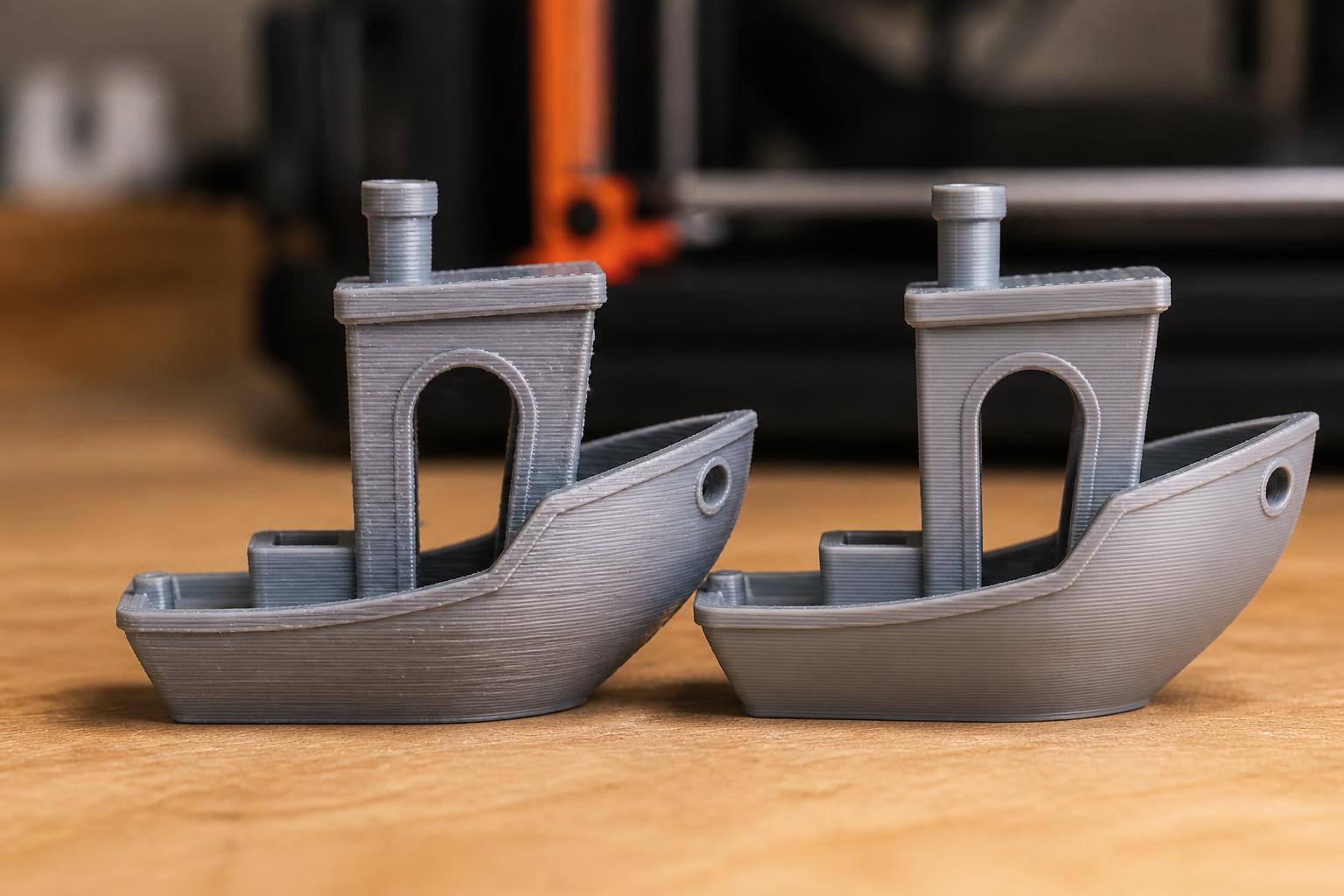
MatterHackers – Best all-around for printer buyers. Every machine page includes verified temperature ranges, layer height recommendations, and first-print guidance. Their support team can walk you through bed leveling and Z-offset over chat. Downside: fewer obscure filament brands. Verification step: After receiving a printer from MatterHackers, open the included SD card and start the preloaded test print (usually a Benchy or calibration cube) without changing any slicer settings. If it prints cleanly at the recommended 0.2 mm layer height and 200°C nozzle / 60°C bed, the printer is correctly configured.
Amazon – Best for convenience, but you trade reliability. A spool of PLA from a known brand like Overture prints well (190–220°C nozzle, 60–80°C bed). A no-name brand may have inconsistent diameter, causing jams and stringing. Mismatch risk: Many Amazon sellers list “PLA” without providing hotend temperature limits or bed adhesion tips. You might buy a spool that requires 230°C to flow properly, exceeding your printer’s PTFE-lined hotend rating (typically 240°C max for Ender 3-style machines), leading to heat creep and clogs.
Micro Center – Brick-and-mortar availability plus online ordering. Their house brand Inland is rebranded eSun, often $18–22 per spool. Free in-store pickup if a location is near you. Limited printer selection – mostly Creality and Prusa.
Dynamism – The go-to for industrial and large-format gear. They carry the BigRep ONE.5 (1 cubic meter build volume, dual extrusion capable). Price is high, but you get manufacturer-backed support and pre-configured profiles for common engineering filaments like PC and Nylon.
Printed Solid – Specializes in open-source platforms (Voron, Rat Rig) and high-quality components. Their “Elite” lineup of filaments (e.g., Jessie PLA) have batch-tested diameter tolerance of ±0.02 mm. Good for users who need to match specific color to a project without gamble.
Best-fit picks by use case
For a complete beginner
MatterHackers – They include pre-saved test prints on the included SD card (the wirecutter advice to start with those because they’re carefully optimized for the printer). You get a free support session during setup. Avoid Amazon here; you might save $50 on a printer but waste hours debugging without a print profile. Trade-off: MatterHackers’ printers typically cost 10–15% more than Amazon prices, but that premium includes a verified first-print experience and a support team that can help you diagnose a warped build plate (e.g., using a 0.1 mm feeler gauge to check bed mesh deviation > ±0.2 mm).
For the experienced hobbyist buying filament in bulk
Micro Center (Inland PLA) or Amazon (Overture/Polyterra). Buy at least 2–3 spools at once to average shipping cost. Stick to brands that publish their recommended print temperatures (e.g., Polymaker PolyLite PLA Pro: 190–220°C nozzle, 60–80°C bed). If you get a bad spool, return it under Amazon’s 30-day policy.
For large-format or industrial projects
Dynamism – Their BigRep ONE.5 is the recommended choice in aerospace and automotive for full-scale prototyping. The one-cubic-meter build volume and optional dual extrusion let you print with support materials like PVA or breakaway layers. But expect to pay $30,000+ and arrange dedicated power and ventilation. Practical implication: If your project fits within a 300 x 300 x 400 mm build volume, you can skip the industrial tier and use a Prusa XL with a multi-material unit instead—Dynamism also sells that, and it costs around $4,000.
For building a custom Voron or Rat Rig
Printed Solid – They stock genuine Voron kits with pre-tested frame extrusions and high-torque steppers. Avoid Amazon for frame parts – you’ll often get generic MGN rails with inconsistent smoothness that cause ghosting at high speeds (60+ mm/s). Verification step: Before assembling, run the carriage along each rail by hand; you should feel no catching or binding. If the rail drags unevenly, return it immediately.
Trade-offs to know
When going with Amazon fails: Common recommendations for Amazon (e.g., “buy a Creality Ender 3 on Prime Day”) often miss that Creality machines ship with a test print sliced for generic settings, not the machine’s actual calibration. Many beginners then struggle with layer adhesion and stringing because the included profile uses a nozzle temperature of 200°C but their environment needs 210°C. MatterHackers provides a corrected profile. Additionally, Amazon’s return policy for printers is often handled by third-party sellers who may require the customer to pay return shipping on a 20-lb box.
MatterHackers’ higher prices are worth it for one reason: Their support can help you diagnose a clogged nozzle (heat creep) or a warped bed via a detailed checklist. That’s not something you get from a warehouse.
Dynamism’s BigRep ONE.5 is expensive but proven. For large projects like tooling and jigs, the machine’s linear rail gantry and closed-loop steppers maintain consistent layer height (0.2–0.4 mm) at print speeds up to 100 mm/s. Competitor large-format printers under $10,000 often suffer from Z-banding and inconsistent extrusion above 50 mm/s.
Printed Solid’s filaments cost more than Amazon basics but eliminate guesswork. Their Jessie PLA has a documented flow rate calibration file and recommended retraction settings (4.5 mm at 40 mm/s for Bowden, 2 mm at 30 mm/s for direct drive). For something like ASA or PETG, that precision prevents oozing and bridging failures.
Related questions
Which 3D printer website has the best warranty?
Dynamism offers full manufacturer warranties on industrial machines (typically 1 year), while MatterHackers provides a free 30-day return and paid extended plans. Amazon sellers vary – check the seller’s return rate before buying a printer there.
Can I trust Amazon reviews for 3D printer filaments?
Partially. Verified purchase reviews are helpful, but many users leave glowing reviews after the first successful spool without testing diameter consistency over length. Cross-check with forums like r/3Dprinting for real-world batch reports.
Should I buy a 3D printer from a general electronics store?
Only if the store has a dedicated 3D printing section with in-store test prints (like Micro Center). Best Buy and other general retailers rarely stock replacement nozzles or offer setup help, which makes troubleshooting harder.
Is it cheaper to buy a 3D printer directly from the manufacturer?
Often yes for budget brands (Creality, Anycubic). But you lose the conveniences of a curated website: no preloaded test prints, no profile validation, and slower shipping. If you’re comfortable tuning your own slicer settings, direct purchase saves $20–50.
Explore This Topic
- Back to Best 3D Printers
- Back to sc0007
Related guides in this cluster:
- Best 3d printer multicolor: Top Picks & Guide
- Best 3d printer under 400: Top Picks & Guide
- Best starting 3d printer: Top Picks & Guide

Ryan has been operating FDM 3D printers since 2017. He runs a 12-machine print farm. His daily drivers include a Bambu Lab X1 Carbon, Prusa MK4s, and Creality Ender-3 V3s that have logged over 15000 print hours. He started 3D Printer Nerd to provide structured troubleshooting guides with diagnostic order, material-specific parameters, and clear stop points.