Best 3D Printing Websites for Getting Parts Made: Services Compared
The best 3D print websites for most users are Xometry (engineering parts), Shapeways (detailed low‑volume), JLCPCB (cheap fast prototypes), and Protolabs (production‑grade parts). If your part is larger than 12 inches in any dimension, switch to Stratasys Direct or BigRep Service. For a single functional piece under $50, start with JLCPCB; if surface finish or material variety matters more than cost, use Shapeways.
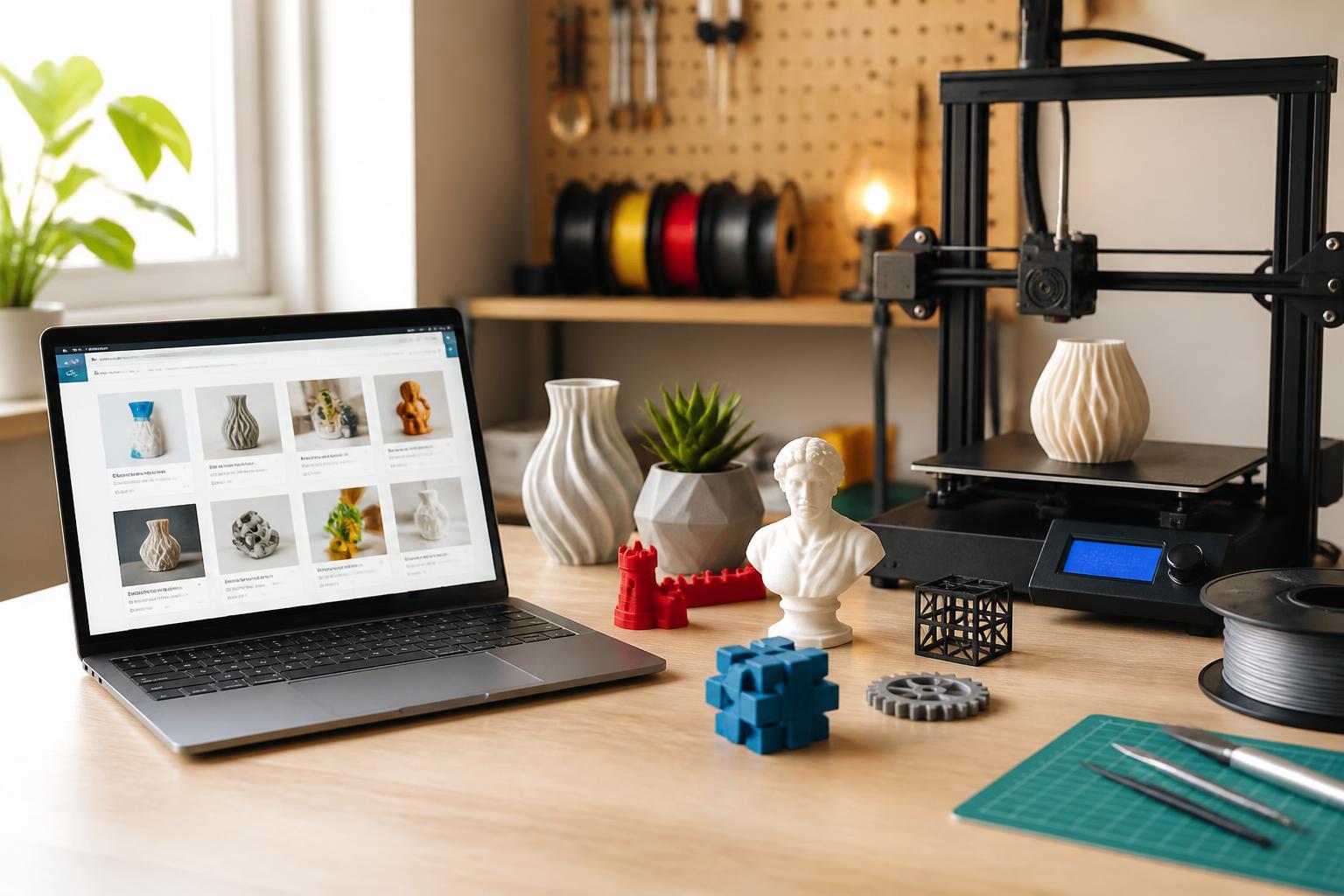
Quick answer
| Service | Best for | Starting cost (small part) | Lead time (business days) | Max build size (inches) |
|---|---|---|---|---|
| Xometry | Engineering parts, metals | $30 | 3–5 | 24×24×24 (FDM) |
| Shapeways | Art, jewelry, one‑offs | $20 | 5–10 | 11×11×12 (SLS) |
| JLCPCB | Cheap rapid prototypes | $10 | 1–3 | 8.7×8.7×7.9 (FDM) |
| Protolabs | Production‑run strength | $80 | 1–5 | 28×20×20 (SLS) |
Practical implication: If you need a part that will actually be used (not just a look‑alike), Xometry or Protolabs will survive testing. JLCPCB prints are fine for fit checks but may crack under load – PLA’s layer adhesion is weaker than Nylon 12 from Xometry.
Verification step: Upload your STL to any service’s instant‑quote page. If the model exceeds the printer’s max size, the tool shows a red warning or greys out the “add to cart” button. Use that feedback to choose a different service before checkout.

Mismatch to watch for: JLCPCB does not accept STEP or OBJ files – only STL and 3MF. Converting a STEP to STL can introduce faceting errors or non‑manifold edges, causing a rejected upload. If your original CAD is in STEP, use Xometry or Protolabs instead.
Comparison framework
The four services below cover the vast majority of consumer and small‑business 3D printing needs. They differ in material selection, tolerances, and minimum order policies.
| Feature | Xometry | Shapeways | JLCPCB | Protolabs |
|---|---|---|---|---|
| Material count | 30+ (including metals) | 70+ (ceramic, brass, silver) | 6 (PLA, PETG, resin) | 10+ (engineering thermoplastics, metals) |
| Layer height (best) | 0.08 mm (MJF), 0.1 mm (FDM) | 0.05 mm (resin) | 0.1 mm (FDM), 0.05 mm (resin) | 0.08 mm (SLS) |
| Min order | $50 | None | None | $150 |
| Surface finish options | Vapor smoothing, bead blast | Polishing, dyeing, plating | None (standard only) | Vapor smoothing, shot peening |
| Shipping origin | US (multiple facilities) | Netherlands / US | China | US |
Decision rule: If your part has overhangs past 45° and you want zero support marks, choose a service that uses powdered‑bed fusion (MJF or SLS) – those processes are self‑supporting. Xometry (MJF) and Shapeways (SLS) are the best options. Resin and FDM prints will require post‑processing to remove support scarring.
Best-fit picks by use case
Quick prototypes under $30
JLCPCB – Upload an STL, pick PLA or standard resin, and you’ll often get a shipping notification in 24 hours. For a 1″×1″×2″ test piece, expect $8–$18 including domestic shipping. Trade‑off: Surface quality is rough. If you need a precise fit check (e.g., a bracket that must mate with another part), the bumpy layer lines from FDM may mislead your measurement. In that case, request the resin option (0.05 mm layer height) for an extra $5–$10.
High-strength functional parts
Xometry – Their Multi Jet Fusion (MJF) in Nylon 12 delivers nearly isotropic strength and layer heights as low as 0.08 mm. For heat deflection up to 180°F or impact resistance, select HP 3D HR PA12 or carbon‑fiber‑filled nylon. Verification: After uploading, check the “materials” dropdown – HP 3D HR PA12 is a separate selection, not just “Nylon 12”. Mismatch threat: If you order “Nylon 12” by mistake, you’ll get standard PA12, which warps in hot engine bays (e.g., under‑hood components). Always confirm the exact material code.
Large-format objects (over 12 inches)
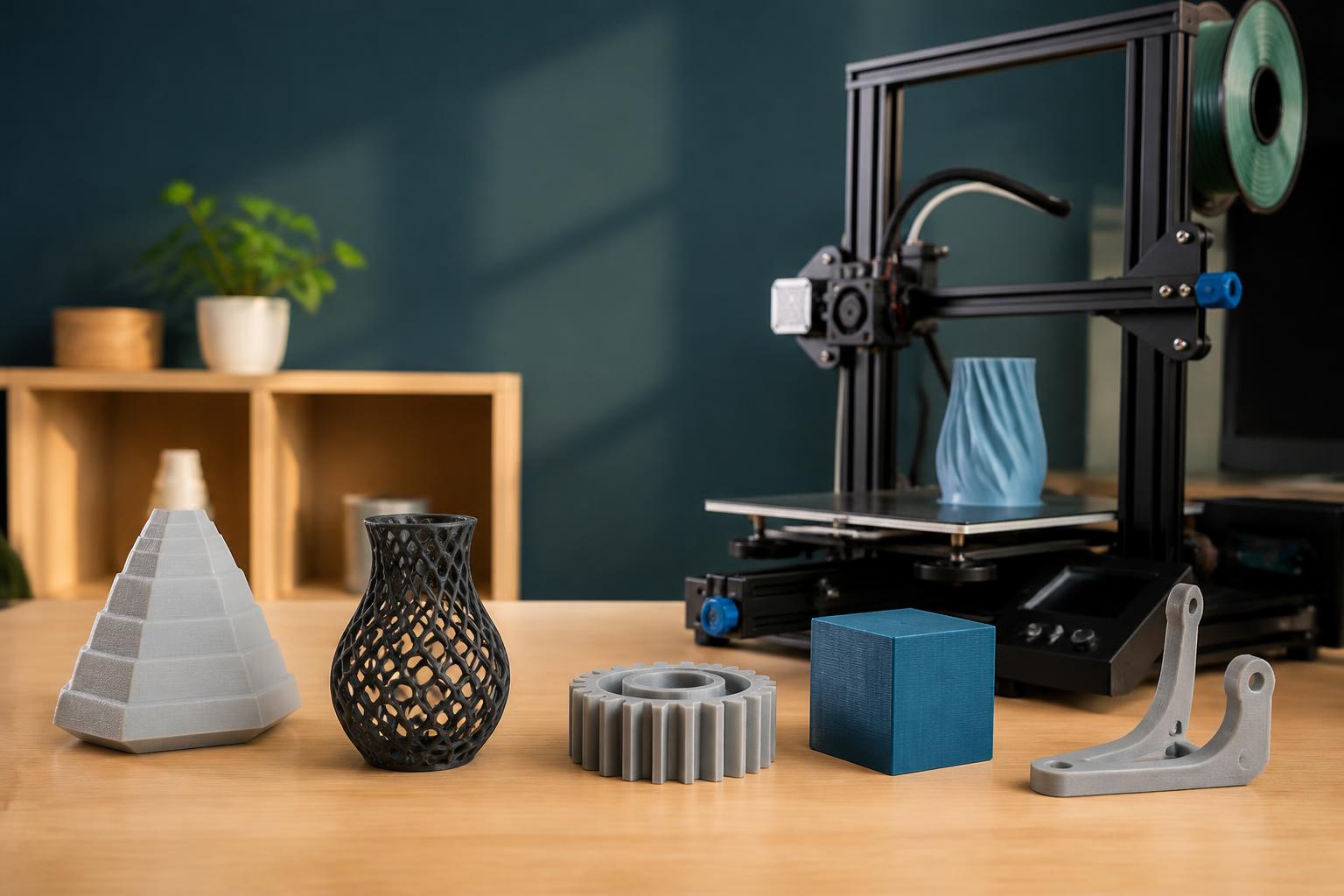
Stratasys Direct or BigRep Service – Build volumes up to 39×39×39 inches. Expect lead times of 5–10 days and per‑part costs starting around $500. Trade‑off: Material options are limited to FDM‑grade filaments (PLA, PETG, ASA). If you need a large hollow shell for a trade show display, this works fine. If you need a large structural part that will hold a static load, confirm the layer adhesion specs with the service – ASA has better UV resistance but weaker interlayer bond than PETG.
High-detail miniatures or jewelry
Shapeways – Resin prints (SLA, DLP) achieve 0.05 mm layer height with full color dyeing and polishing. For metal jewelry, they print in brass, bronze, and silver via lost‑wax casting. Practical verification: After ordering, the service provides a “printability report” that flags thin walls (<0.5 mm) or unsupported islands. If your model has delicate fingers or antennae, review this report before approving production. **Trade‑off:** Per‑part prices are higher – a 1″ ring blank runs about $30 – but Shapeways offers a free reprint if the part fails quality inspection.
Trade-offs to know
- Hidden fees: Surface finishing (vapor smoothing, bead blasting, dyeing) is almost always an extra charge. Xometry and Shapeways show finishing costs in the quote. JLCPCB adds a “color dye” fee that can double the part price – always preview the total before checkout.
- File preparation: All services require watertight STL or 3MF. If your model has holes, flipped normals, or non‑manifold edges, the upload will be rejected. Xometry and Shapeways have free auto‑repair tools that fix most errors. JLCPCB’s auto‑repair is less reliable – it often smooths over small gaps rather than closing them, creating micro‑leaks in the final geometry. Use Meshmixer or PrusaSlicer before uploading.
- Contact geometry: Overhangs past 45° need supports, and support marks are the biggest source of post‑print cleanup. Xometry and Shapeways allow you to request “no supports” in MJF or SLS materials (powder acts as its own support). Protolabs’ SLA resin requires dense lattice supports that leave rough contact points; budget an extra step for sanding or filling.
- Shipping delays: JLCPCB is based in China; standard air takes 3–6 business days. Xometry and Shapeways ship from US facilities (1–3 days). Protolabs also ships from the US but charges a premium for expedited (often 50% on the print cost). If you need a part in 48 hours, choose Xometry’s “Fast Track” option and pay the extra.
Related questions
What file format do 3D print websites accept?
STL and 3MF are universal. OBJ and STEP work on Xometry and Protolabs but not on JLCPCB or Shapeways. Always check the upload page before converting your CAD file.
How much does it cost to 3D print a part online?
A small part (2″×2″×2″ in PLA) starts at $10–$20 at JLCPCB, $30–$60 at Shapeways, and $40–$100 at Xometry. Larger or more complex parts (supports, multiple materials, metal) can exceed $500. Use the instant‑quote tool for an accurate number.
Can I order a single part on these websites?
Yes – Shapeways and JLCPCB have no minimum. Xometry’s minimum is $50, so a single very small part may not hit that threshold; bundle two or three small parts in one order. Protolabs requires a minimum of $150.
Which website has the fastest turnaround?
JLCPCB for small FDM parts (1–3 days). Xometry and Protolabs can ship in 1–2 days with expedited service (50% premium). Shapeways typically takes 5–10 days due to finishing and quality checks.
For any part over 12 inches, use Stratasys Direct or BigRep Service. For everything else, start with JLCPCB if cost is king, Xometry if strength or material variety matters, and Shapeways if you need a single, beautiful piece.
Explore This Topic
- Back to Best 3D Printers
- Back to sc0007
Related guides in this cluster:
- 3d print best: Top Picks & Guide
- Best 3d printer websites: Top Picks & Guide
- Best 3d printer multicolor: Top Picks & Guide

Ryan has been operating FDM 3D printers since 2017. He runs a 12-machine print farm. His daily drivers include a Bambu Lab X1 Carbon, Prusa MK4s, and Creality Ender-3 V3s that have logged over 15000 print hours. He started 3D Printer Nerd to provide structured troubleshooting guides with diagnostic order, material-specific parameters, and clear stop points.