Best 3D Printer Bed Surface: PEI vs Glass vs Garolite – Tested for PLA, PETG and TPU
Best 3D Printer Bed Surface: PEI vs Glass vs Garolite
For most people printing PLA, PETG, and ABS, a textured PEI spring steel sheet is the best bed surface you can buy right now. It delivers reliable adhesion while the bed is hot, releases prints almost effortlessly once it cools, and the flexible steel makes part removal a five-second job with no tools. Glass still wins for absolute bottom-layer smoothness on display pieces, and Garolite is the specialist pick if you print nylon or need a no-heat surface that actually works, but PEI is the daily-driver surface that solves more problems than it creates.
The real decision isn't which surface is "best" in the abstract. It's which surface matches the materials you actually print and the failure you're tired of dealing with. The table below gives you the fast answer, and the sections that follow walk through exactly where each surface earns its place—and where it lets you down.
| Surface | Best For | Adhesion Method | Release Method | Worst Failure Mode |
|---|---|---|---|---|
| Textured PEI (spring steel) | PLA, PETG, ABS, TPU, ASA | Heated bed (50–70°C for PLA, 80–90°C for PETG) | Cool-down release; flex plate | PETG over-adhesion on smooth PEI can tear the surface |
| Smooth PEI (spring steel) | PLA for glossy bottom finish | Heated bed (50–65°C for PLA) | Cool-down release; flex plate | Same PETG risk; scratches more easily than textured |
| Glass (borosilicate or tempered) | PLA, PETG for mirror-smooth bottoms | Heated bed + adhesive helper (glue stick, hairspray, or Magigoo) | Cool-down release; sometimes stuck hard | PLA can refuse to stick without adhesive; PETG can fuse to bare glass and chip it |
| Garolite (G10/FR4) | Nylon, PETG, PLA (unheated or low-heat) | Mechanical grip; no heat required for nylon | Flex or gentle wedge; parts pop free | Nylon warping on unenclosed printers; surface can delaminate over repeated high-heat cycles |
Best PEI Bed Surface Fit for Everyday PLA and PETG Printing
PEI on a spring steel sheet is the closest thing to a set-and-forget bed surface for the majority of hobbyist and small-shop printers. The reason is straightforward: PEI grips PLA and PETG reliably at moderate bed temperatures, and the flexible steel plate lets you pop the sheet off the magnetic base, flex it, and watch the print release without ever touching a scraper. That combination eliminates the two most common bed-surface frustrations—prints that won't stick and prints that stick too well.
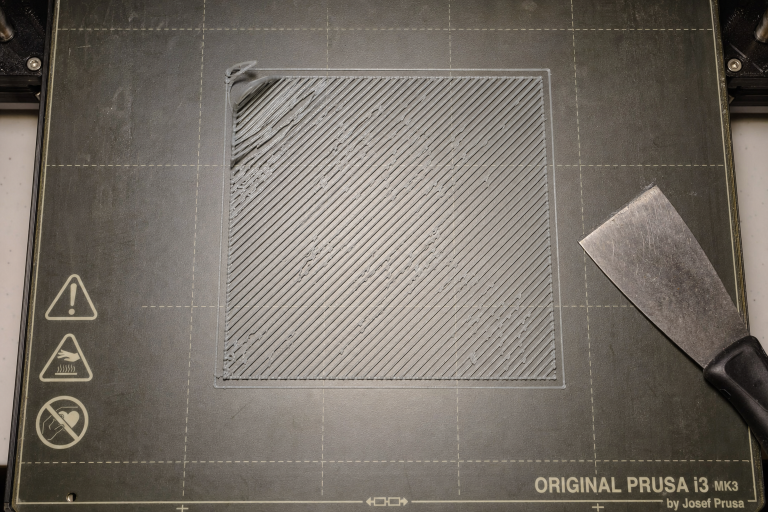
The textured PEI variant adds a slight matte texture to the bottom layer that hides minor first-layer inconsistencies, which is genuinely useful if you're printing functional parts where bottom finish doesn't matter. Smooth PEI gives you a glossy bottom surface closer to glass, but it comes with a real caution: PETG can bond so aggressively to smooth PEI that it tears the surface on removal. If you print PETG regularly on smooth PEI, a thin layer of glue stick as a release agent isn't optional—it's insurance against destroying a $25–40 sheet. Textured PEI largely sidesteps this problem because the reduced contact area naturally limits the bond strength.
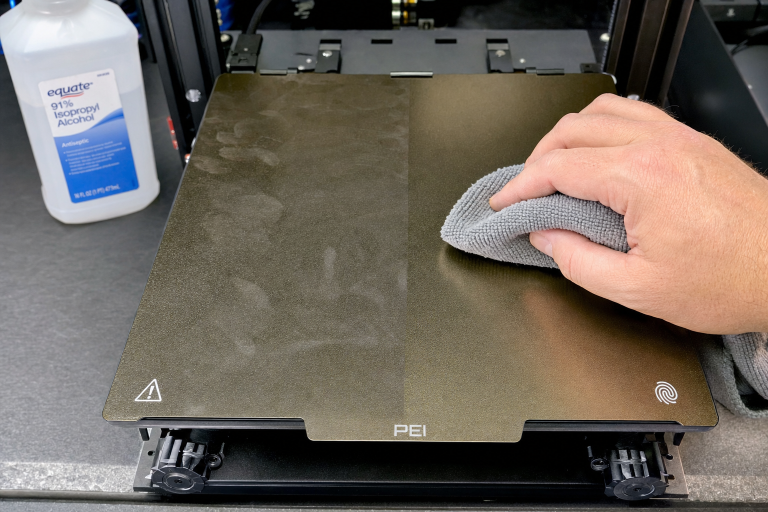
The magnetic base also means you can swap between multiple PEI sheets in seconds. If you run a print farm or just want to start the next print immediately while the previous one cools, a second sheet pays for itself in time saved. The main durability concern with PEI is surface contamination: fingerprints leave enough oil to cause adhesion loss in the touched spots. A quick wipe with isopropyl alcohol between prints restores it, but if you skip that step consistently, you'll see random first-layer lift and blame the surface when the real culprit is skin oil.
What this means for your next purchase is practical: if you're currently fighting adhesion on a stock BuildTak or PC-coated bed, a textured PEI sheet is the single upgrade most likely to make printing feel reliable again. You won't need to adjust your slicer's bed temperature settings beyond the normal PLA and PETG ranges you already use, and you can stop reaching for the scraper entirely. The one verification step worth running before you buy is checking whether your printer's bed heater can hold a stable temperature at the high end of PETG's range—80°C to 90°C.
If your bed struggles to reach or maintain 80°C, textured PEI will still work for PLA but may give you inconsistent PETG adhesion on larger footprints. In that case, a Garolite sheet that grips PETG with less heat dependence becomes a safer alternative worth considering before you spend on PEI.
Main Trade-Offs Across PEI, Glass, and Garolite
Every bed surface forces you to accept at least one compromise, and the one that catches people off guard is the adhesion-temperature-release triangle. PEI's convenience depends on a heated bed. If your printer's bed heater is weak, slow, or non-existent, PEI's adhesion advantage shrinks dramatically. PLA will still stick to room-temperature PEI in a pinch, but PETG and ABS won't reliably hold without heat. Glass without a heater is even worse—you'll be fighting adhesion on every print unless you coat it with something sticky, and at that point you're managing a consumable layer rather than a surface.
Garolite flips this dynamic. It grips nylon at room temperature without any adhesive helper, which is why it's the default recommendation for nylon printing on open-frame printers. The mechanical bond between nylon and Garolite's fiberglass-epoxy surface is strong enough to hold a print during the entire job, yet the part releases cleanly once the bed flexes or you wedge under an edge. The trade-off is that Garolite doesn't love sustained high heat. Repeated cycles above 80–90°C can cause the surface layers to delaminate or develop bubbles, especially on cheaper G10 sheets not rated for continuous thermal stress. If you're printing ABS or ASA at 100–110°C bed temperatures, Garolite is the wrong surface—PEI or glass with an enclosure is the right call.
Glass offers one thing neither PEI nor Garolite can match: a perfectly flat, mirror-smooth bottom layer with zero texture transfer. For display pieces, lithophanes, or parts where the bottom surface is visible and you want a glass-like finish, borosilicate glass is still the reference standard. The cost of that finish is adhesion inconsistency. Bare glass is finicky—some PLA brands stick perfectly, others lift at the corners on the same bed temperature and same first-layer height. Most glass users settle on a routine adhesive layer (glue stick, hairspray, or a dedicated product like Magigoo) to make adhesion predictable. That adds a consumable step to every print and a cleaning step after, which is exactly the friction PEI users avoid.
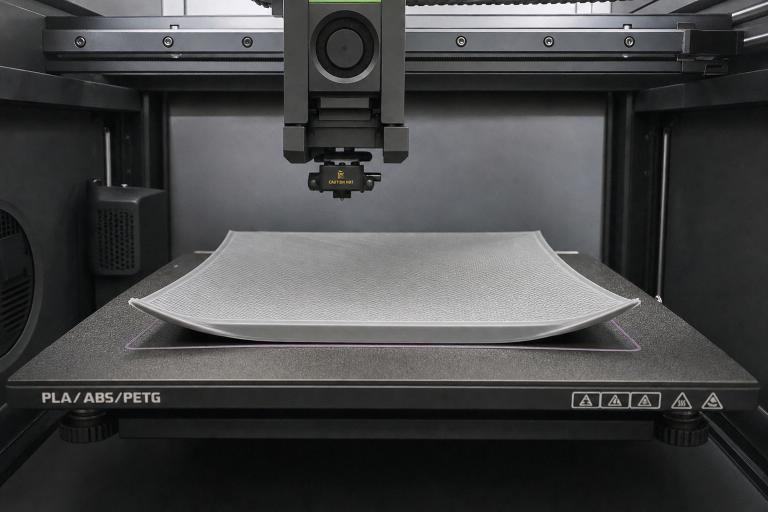
A realistic mismatch that catches buyers off guard is assuming a spring steel PEI sheet will fix a warped bed. Spring steel conforms to the magnetic base underneath it. If your aluminum bed plate has a 0.3mm dip in the center, the PEI sheet will mirror that dip on every print. You'll see perfect adhesion at the edges and a nozzle scraping or gap in the middle, and no amount of PEI surface prep will fix it because the problem is the bed geometry, not the surface material.
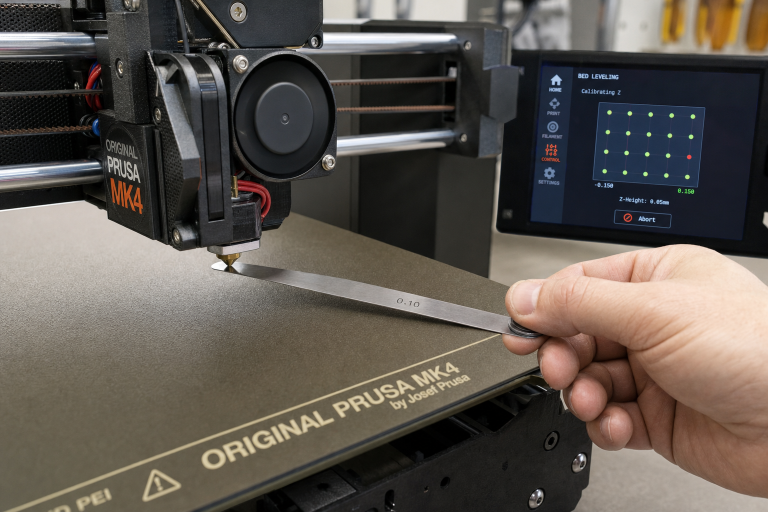
The verification is straightforward: run your printer's bed mesh visualizer or probe a 5×5 grid. If the total deviation across the bed exceeds 0.2mm, a rigid glass plate will give you a flatter reference plane than a flexible PEI sheet following that same contour. On a badly warped bed, glass isn't just a cosmetic upgrade—it's a first-layer rescue strategy.
When to Skip PEI and Choose Glass or Garolite Instead
Skip PEI if you print nylon regularly and don't want to fight with glue sticks or garolite-on-PEI hybrid setups. Nylon's adhesion to PEI is inconsistent at best; some filled nylons will hold, but unfilled nylon will lift mid-print often enough to waste material and time. Garolite solves this natively. A 1.5mm or 2mm Garolite sheet clipped to your bed gives you a nylon-ready surface that works without heat, without adhesive, and without the frustration of watching a 12-hour nylon print curl off the bed at hour eight.
The failure mode to watch for on Garolite is warping on tall nylon parts printed without an enclosure—the material itself shrinks enough to pull the Garolite sheet upward if it's not rigidly clamped at all four corners. You'll see the print start fine and then develop a progressive bottom-layer gap that grows with each layer until the nozzle knocks the part loose. The fix is either an enclosure to slow cooling or heavy-duty binder clips at every corner to keep the sheet flat under tension.
Skip PEI if you need the absolute flattest possible first layer and your printer's bed mesh can't compensate for surface variation. As covered in the trade-offs, a flexible sheet inherits the bed's imperfections. Glass, by contrast, is rigid and flat to within a fraction of a millimeter across its entire surface. A 3mm or 4mm borosilicate glass plate can rescue first-layer consistency on a printer with a warped bed in a way that a flexible PEI sheet simply cannot.
The practical implication for your setup decision: if you've already run a bed mesh and seen deviations above 0.2mm, skip the PEI upgrade and go straight to glass. You'll trade the convenience of flex-plate removal for a first layer that actually sticks across the whole bed, and on a warped machine that trade is worth making every time.
Skip PEI if you're printing PETG on a smooth PEI surface and you've already torn one sheet. The fix isn't to buy another smooth PEI sheet and hope for the best—it's to switch to textured PEI or move to glass with a reliable release layer. Textured PEI's reduced contact area naturally limits PETG's bond strength, and glass with a glue-stick barrier releases PETG cleanly every time.
The one scenario where glass fails catastrophically with PETG is printing directly on bare glass: the PETG can fuse to the glass so thoroughly that removing the print chips the glass surface or takes a chunk out of it. Never print PETG on bare glass. The release layer isn't optional, and if you forget it even once on a large PETG print, you may be buying a new glass plate.
Bottom Line
Buy a textured PEI spring steel sheet if you print PLA, PETG, ABS, or TPU on a heated bed and want the lowest-friction daily printing experience. It's the surface that makes adhesion reliable and part removal trivial, and it handles the materials most people actually use. Keep a smooth PEI sheet as a second plate if you occasionally want glossy bottom layers on PLA prints.
Buy a borosilicate glass plate if your printer's bed isn't flat, you chase perfect bottom-layer cosmetics, or you print PETG and prefer a glue-stick workflow over risking a PEI sheet. Just accept that glass requires an adhesion helper for consistency and a scraper for stubborn parts. The flatness advantage is real and measurable—on a bed with more than 0.2mm of deviation, glass will give you better first layers than any flexible sheet can.
Buy a Garolite sheet if nylon is a regular material in your rotation and you want a no-heat, no-adhesive surface that works. Pair it with an enclosure if you print tall nylon parts, and don't expect it to survive years of 100°C-plus bed cycles. Garolite's value is specific: it makes nylon printable without a fight. For PLA and PETG, PEI or glass are better daily drivers.
If you print only PLA on a small printer with a flat bed and you're currently using the stock BuildTak or PC surface that came with the machine, a PEI upgrade is the single highest-impact bed change you can make. If you print nylon and you've been fighting it on PEI or glass, Garolite isn't a luxury—it's the surface that makes the material printable without a fight. Match the surface to the material and the failure you're actually experiencing, and you'll stop thinking about bed adhesion as a problem at all.

Ryan has been operating FDM 3D printers since 2017. He runs a 12-machine print farm. His daily drivers include a Bambu Lab X1 Carbon, Prusa MK4s, and Creality Ender-3 V3s that have logged over 15000 print hours. He started 3D Printer Nerd to provide structured troubleshooting guides with diagnostic order, material-specific parameters, and clear stop points.